
Coppicing in a nutshell
An introduction to all things coppice
Coppicing is the periodic cutting of broadleaf trees down to a stump and then allowing them to regrow.
That’s it! Why it’s done, how it’s done and what happens to the material that’s cut varies greatly but it’s all based on this one simple principle.
How coppicing works
When cut at ground level some species of tree don’t die but instead respond by sending up new shoots from the cut stump (often called a stool). This is the case for most species of native broadleaf tree and it’s this characteristic that means a tree can be coppiced. Certain species coppice better than others with hazel, sweet chestnut, willow and ash being good examples.
Coppiced trees can go through the cutting and re-growing cycle over and over again and so provide a sustainable source of wood. In the spring after cutting, the established root systems of the stools enable new shoots to grow much more vigorously than a newly planted tree, reaching perhaps 1.5m (5ft) or more in the first growing season, depending on the species and the growing conditions. This means that useful poles are quickly produced which can be cut once they reach a useful size. The process then starts all over again!
Coppiced trees can go through the cutting and re-growing cycle over and over again

The Coppice Cycle – a truly sustainable system
Coppicing in action! The cutting and subsequent regrowth of coppice in Hayley Wood, Cambridgeshire
Different systems of coppice exist but most coppiced woods are divided into plots (also called cants or coupes from the French couper – to cut). The plots are cut on a rotation, with one or more plots cut each year, normally in the winter. The following year a different plot (or plots) will be cut and so on year after year, eventually returning to the first cutting area after a certain amount of time. How long a plot is left before being recut depends on the dominant species, the growing conditions and the reasons for coppicing.

A theoretical example of coppice plots set up on an 8 year rotation, a common cutting regime for hazel coppice in the south of England. 1 plot is cut per winter, resulting in lots of different stages of regrowth thus providing a mosaic of different habitats for wildlife.
Read more - The Biology
The Biology
Dormant buds are produced under the bark throughout the life of a broadleaf tree. These remain dormant so long as the buds nearer the top of the tree are dominant. Cutting removes the dominant buds and so triggers the dormant ones into action. Dormant buds can shoot from the side of the stool or, in some species such as hazel, from the roots if the stump is cut close to the ground. There is debate about how high stumps should be cut and the effect this has on new stem growth and the stability and health of a stool. These effects also vary between species.

Dormant buds in a freshly cut coppice stool
Cherry picking (i.e. cutting only the best / most useful stems) is not best practice as this does not trigger the growth of dormant buds so well, and any new growth is more likely to be shaded out by the uncut stems. Mature (for the species) trees don’t generally coppice well. They tend to produce fewer shoots either because the dormant buds have failed, or because they are situated under a thick layer of old bark which they can’t easily break through.
The vigorous growth rate seen from coppice stools is not only the result of a large root system with a good store of glucose, but also due to chemical changes in the tree. Trees produce a growth promoter in their root system, and growth inhibitors in their stems, largely in the apical buds (those at the growing tips). These two chemicals interact with each other to keep a balance and give different growth rates for different species. Coppicing removes the apical buds and therefore dramatically reduces the production of growth inhibitor while leaving the roots untouched, thereby not impacting the production of the growth promoting chemical and so producing new stems with a very rapid growth rate. As the stems regrow and more apical buds (and therefore growth inhibitor) is produced, there is a gradual slowing of the growth rate and a return to the normal balance over a number of years.
Read more - Coppice Systems
Coppice with Standards
Coppice with standards has been common in the UK since the 13th century and produces two products – timber and underwood. Perhaps surprisingly by today’s attitudes, the latter is the one most mentioned in historical documents and, for many centuries, was the more important of the two.
In a coppice with standards system smaller trees (underwood) are cut at regular, fairly short intervals and allowed to regrow, and a limited number of timber trees (standards) are grown amongst the coppice. These standards may be maiden trees (i.e. never coppiced), or arise from stools where all but one shoot is removed (known as singling or promoting).
Before the arrival of modern machinery, large trees were time consuming and difficult to fell, extract and process. Standards provided timber for construction but were not the huge, veteran trees we see today. Historical evidence shows that most standards were oak and were generally felled before reaching 100 years of age. With each standard casting shade upon the historically valuable underwood, and also a succession of timber trees being required, the question of how many standards there should be in any given area has long been debated. In 1544 a Royal statute aimed at improving woodland management decreed there should be 12 standards per acre. This was probably influenced by the expansion of the iron industry and the need for charcoal. This figure is often quoted today but doesn’t take into account the much-larger size of many standards in modern coppice systems.

Coppice with standards in Hayley Wood, Cambridgeshire. The underwood can be seen in the foreground of the photograph with standard oak trees behind.
Coppice without standards does exist and has obvious benefits for the growth of the underwood, but it is much less common.
Read more - Coppice Plot Setup & Rotation
Plot Setup & Rotation
Coppicing works on a rotation with plots or coupes organised so that a certain number are cut per year thus ensuring a constant supply of materials. The length of rotation, i.e. how long a plot is left to grow before being cut again, will largely depend on the species and the end use or management aims. It will also be affected by site specific factors such as soil depth and fertility, climate etc. Such factors have led to regional variations in the UK i.e. oak coppice for the tanning industry in the north-west and sweet chestnut coppice in the south. Where old, neglected, derelict coppice is being restored, the rotation and the products produced will be different to those of an in-cycle system.
When planning how to setup new coppice plots, there are many practical considerations, including:
- The plots need to be large enough to allow in sufficient light for regrowth;
- Larger and more open plots are more able to cope with deer browsing – deer like to hide so prefer edges; and
- Access and extraction – how tools and machinery are getting in and how any product is getting out needs to be considered.
Organising a coppice system with adjacent plots, has a number of benefits including:
- Being better for wildlife which can be slow to colonise new habitat;
- Ensuring that the newly cut plot is not entirely shaded by dense woodland as the neighbouring plot will consist of young regrowth; and
- Providing a larger, more open area which is less preferable for deer.
When to coppice during the year can be a subject of some debate but it is generally considered best practice to complete any cutting activity during the winter months. The advantages of this are:
- less disturbance to wildlife;
- less foliage means lighter, easier to handle stems;
- less sap means bark is less likely to tear;
- less sap in the wood means it generally lasts longer – a lower sugar content is less attractive to fungi and insects and stems cut with the sap still up may dry and leave open channels in the wood thus speeding up decay; and
- cutting in late summer can mean that new regrowth doesn’t have time to set a dormant bud and so will be susceptible to winter frost damage resulting in a forked or kinked stem.
Why coppice?
People have coppiced woodland for thousands of years in order to generate useful materials. These have changed over time, though many modern products have their roots in much more traditional items. Some of the most common products produced today include:
- Beanpoles, pea sticks and canes for the allotment or garden;
- Poles for fence posts and cleft fencing;
- Stakes and binders for the traditional craft of hedgelaying;
- Materials for making thatching spars, baskets, obelisks, walking sticks and chairs;
- Rods for making woven panels (called hurdles) and fences;
- Charcoal and biochar;
- Firewood;
- Brash for making pimps, faggots and fascines; and
- Myriad more!
People have coppiced woodland for thousands of years in order to generate useful materials.
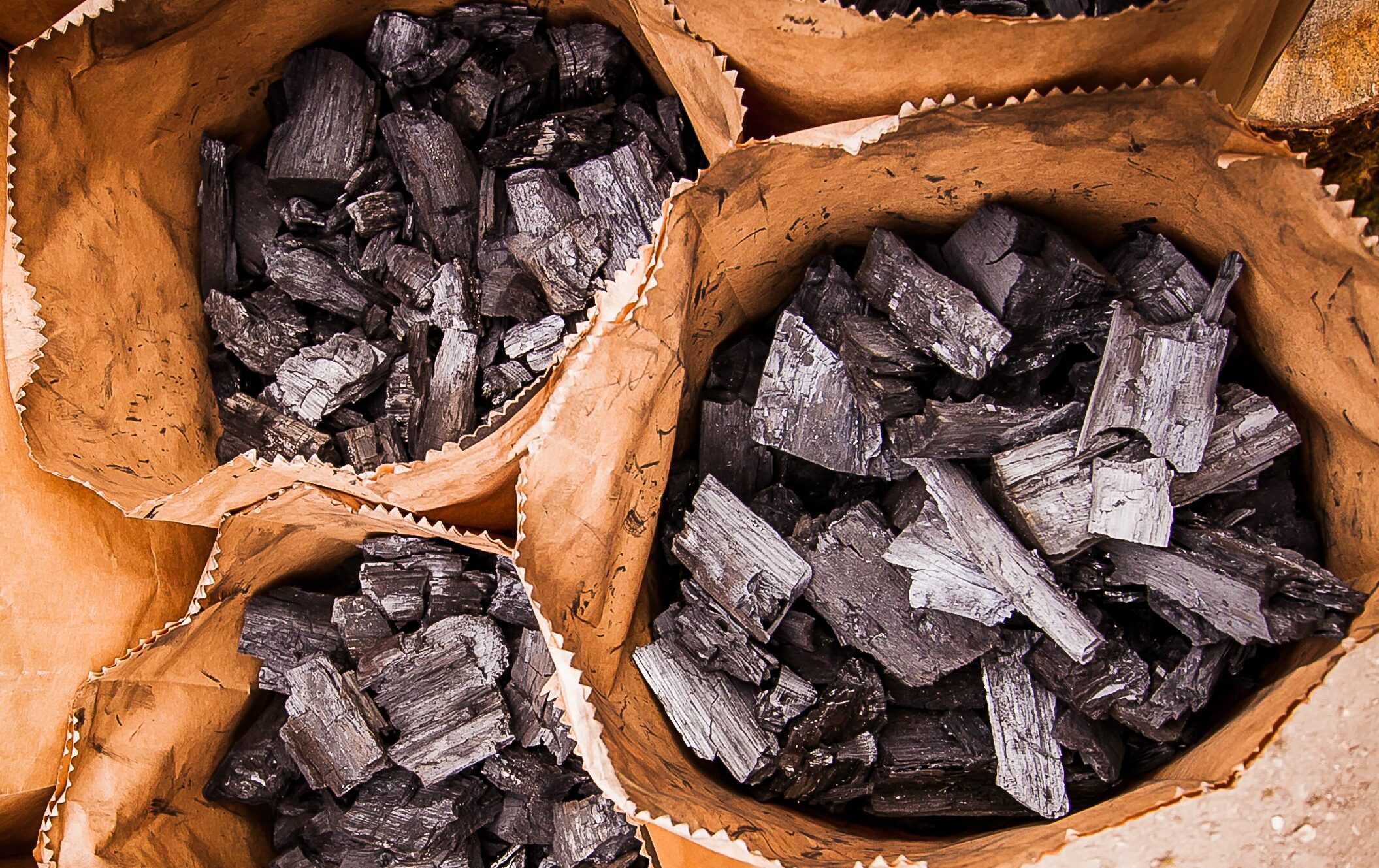


A small sample of coppice products
Photo credits: Bagged charcoal – Jim Bettle, Chestnut picket fence & chestnut trellis – Tim Roskell
And as if producing so much useful stuff wasn’t good enough reason to coppice, there are many more associated benefits too, including:
- It’s sustainable and can provide people with locally sourced materials for the home and garden, reducing our reliance on importing wood from potentially unsustainable sources.
- History has shown that a woodland which is worked and is profitable is one that is much more likely to remain in the landscape.
- It supports coppice workers, the rural economy and traditional crafts.
- It allows more light and more warmth to reach the woodland floor and so creates ideal conditions for woodland flora such as wood anemone and celandine. These flowers then attract more butterflies and insects, which are in turn are a food source for birds.
- Many woodland species have adapted over thousands of years to live in coppiced woods – they need them to survive!
- It results in a mosaic of differently aged woodland that can provide a wider range of habitats for a wider range of species – much more so than an evenly aged plantation woodland.
- The coppice rotation enables birds, insects and small mammals to move around the wood with the cutting and means they can always find the conditions they like the best!
The coppice rotation enables birds, insects and small mammals to move around the wood with the cutting and means they can always find the conditions they like the best!

Oxlips, wood anemone and bluebells in Hayley Wood, Cambridgeshire – coppiced woodlands can provide perfect conditions for a rich ground flora
Read more - Additional Benefits of Coppicing
Ecological Benefits
Regularly cut coppice can result in sunnier, less-shaded woodland rides which can be a home to plant species such as ragged robin, purple loosestrife, devil’s bit scabious and orchids, all of which have seen serious declines in recent decades. Coppicing can also create a graded edge around the perimeter of a woodland or within it, between the rides and mature trees. It is often these edges that are the richest habitats with the most species diversity.
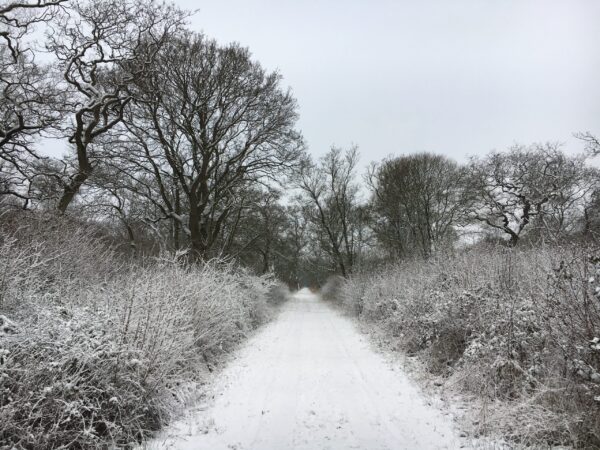
Coppicing can create a graded edge between a woodland ride and mature trees – Hayley Wood, Cambridgeshire
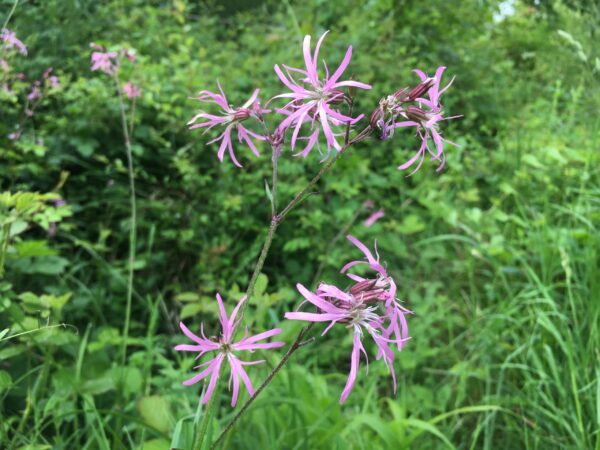
Ragged Robin in Hayley Wood, Cambridgeshire – increased light reaching woodland rides can increase floristic diversity
Environmental Benefits
Trees take in and lock-up carbon as they grow. That’s why tree planting is often put forward as part of the solution to climate change. The process of removing carbon dioxide from the atmosphere, known as carbon sequestration, slows as a tree gets older, and so an even-aged woodland of trees all growing older together will be taking in less carbon dioxide out of the air each year. Research is currently underway into the carbon sequestration rates in coppice woodland. While it is known that younger, more vigorously growing trees will be sequestering carbon more rapidly, they may not be storing so much of it as larger, older trees and so there is a balance to be struck. Once cut, if the coppiced wood is burnt or left to rot then the carbon will be released back into the atmosphere. When the cut wood is used for making a product however, the carbon remains locked up for longer.
Community Benefits
Coppicing and the ability of woods to provide people with useful materials is what has ensured the survival of many woods over the centuries. A lot of woods are now places of recreation and more research is being carried out into the physical and mental health benefits of spending time in woodlands, and outside in general. As coppicing generally involves cutting small stems that can be dealt with using hand tools, it can be a very accessible activity and so has a long history of volunteer involvement, and is playing an important role in the emerging idea of social forestry.
A Brief History of Coppicing
It is believed that coppicing in Britain dates back to the Neolithic period, around 4,000 BC. During this time, migrants from Europe and beyond introduced a settled culture into Britain, a lifestyle that required both clearing and using wood. One piece of evidence for this is the Sweet Track, an ancient wooden walkway found buried and preserved in the Somerset Levels and subsequently dated using dendrochronology. The nature of the wood used to support this walkway suggests it came from a coppiced woodland.

A diagrammatic representation of the Sweet Track
Attribution: Richerman at English Wikipedia

Sweet Track Illustration
E Mortalmans
For thousands of years since, wood has been an essential part of life in Britain providing fuel for homes and metal production, building materials for houses and fences and wood for tool handles, baskets, sheep hurdles, charcoal, faggots and much more besides. Well managed and worked coppice woodlands throughout Britain ensured a sustainable supply of wood that could meet a wide variety of needs.
During the 19th and early 20th century, expansions in agriculture, an increased focus on plantation forestry, more widespread use of coal and the development of new materials all led to a decline in coppicing. However, since the 1970s an increased interest in conservation, climate change, sustainability and traditional crafts as well as in woodlands more generally have all contributed to coppicing being more widely practiced once again.
Read more - Woodland History in Britain
Woodland history in Britain begins around 12,000 years ago at the end of the last Ice Age when the climate slowly became able to support tree growth again.
End of the last Ice Age – 10,000 BC
As the glaciers retreated northwards across Britain they deposited the debris that they had trapped on their journey south. This debris was the basis for soils and allowed colonisers such as birch, aspen and sallow to very gradually move in, the seeds either being carried on the wind or by birds. These species are able to cope with harsh conditions and, as they deposit leaf litter and penetrate into the loose rock with their roots, they slowly improve the soil. This then improves conditions for other species of plant and tree which are also offered some shelter by the pioneer species. This process is known as succession and the exact same thing happens today. Leave a patch of ground unattended for a while and you’ll probably get brambles moving in, leave it a bit longer and some thorn bushes might appear, leave it longer still and other trees will start to grow until eventually you’ve got a wood. At this point, the original pioneer species may have been outcompeted and have disappeared. 12,000 years ago, what we now refer to as Wildwood was forming – large areas of mixed-species woodland. This woodland would have been interrupted by open ground as a result of grazing animals (e.g. deer & oxen), weather events (e.g. windblown trees) and climatic conditions limiting tree growth.
The Neolithic – 4000 BC
During this time, migrants from Europe and beyond introduced a settled culture into Britain, a lifestyle that required both clearing wood, in order to grow crops and graze animals, and using wood, to build dwellings. With only primitive tools available big trees were difficult to both cut and handle so smaller, more manageable poles proved to be much more useful and practical.
The Sweet Track
The Sweet Track is believed to have been built in 3807 BC (dated using dendrochronology) over the course of an earlier (by 30 years) structure – The Post Track – in order to cross 2km of marshland in the Somerset Levels in the south-west of the UK. During the winter, the flooded areas of the Somerset Levels would have provided the community with fish and wildfowl and during the summer, drier areas provided rich, open grassland for grazing cattle and sheep; reeds, wood and timber for construction, and abundant wild animals, birds, fruit, and seeds.
The construction was of crossed wooden poles, driven into the waterlogged soil to support a walkway that consisted mainly of planks of oak, laid end-to-end. It is thought that the track was used for around ten years before being abandoned, probably due to rising water levels. The planks were up to 40 centimetres wide, 3 metres long and less than 5 centimetres thick, cut from trees up to 400 years old and 1 metre in diameter. They would have been felled and split using only stone axes, wooden wedges and mallets. The poles that were driven into the ground to support the planks have a length, straightness, and lack of forks or branches that suggest they were taken from coppiced woodland. The organisation, planning, co-operation and skills required for the construction of such a structure shows the sophistication of the community at that time.
Bronze Age – 2000 BC
Renowned woodland historian the late Oliver Rackham estimates that half of Britain’s wildwood had been cleared by the Bronze Age as Neolithic practices continued to spread. Wood was in constant demand to fuel metal production and coppicing was able to provide a continuous supply.
Roman Britain – 43 to 410AD
The Romans introduced sweet chestnut to Britain and recorded the rotation at which it was cut. They were responsible for developing a large charcoal industry in order to supply the military ironworks.
Anglo-Saxon Britain – 410 to 1066AD
The Anglo-Saxons arrived on the shores of Britain and brought with them the technique of building wattle houses. These required many small poles, again provided by the process of coppicing. At this time wooden barrels were also being bound with hazel hoops.
The Domesday Book – 1086
The Domesday Book was the earliest, semi-quantitative record of woodland in England, and showed that it covered around 15% of the land.
13th Century
By the 13th Century, the population had been consistently growing resulting in more land being cleared for housing and farming. Only 7% of land was now wooded. Therefore the remaining woods became an important resource and were intensely managed. Records show that the underwood was more valuable per hectare than arable farmland. The financial implications of managing a woodland led to landowners keeping better records of who was cutting what and how much it was worth.
During this period, peak efficiency was reached with every piece of wood cut having a use – rods for hurdles and wattle houses, thatching wood, basket making, staves, tool handles, fencing, firewood, stakes, rails, charcoal, faggots for kindling, drains and ovens, the list was endless. The underwood was much easier to cut, handle and transport and served many more purposes than the larger and heavier timber, so was the more highly prized of the two products at that time.
16th Century
During this period the heating of homes became more commonplace and fuel-demanding industries expanded. Firewood was small round logs from coppicing, not the split and dried logs we’re used to today which would’ve been too expensive and considered a waste of good timber. Such increased demand saw the price of underwood rise by 75%.
18th Century
Advances in agriculture meant that for the first time cultivation became possible on poor soils. This laid the foundation for pressure being put on landowners to convert their woodlands into fields of crops.
19th Century onwards
It was this time that saw the widespread decline in traditional coppicing. Railways were now able to take coal to remote places, undercutting the rural fuel market, and agricultural expansion continued apace with the appearance of new technologies. Two World Wars required largescale felling to supply the war effort, and in 1919, resulted in the establishment of the Forestry Commission whose remit was to ensure a constant supply of timber for the country. Forestry was now a state matter.
Plantation forestry (which had been around since the 16th Century) steadily became more dominant, though fortunately not all ancient woodlands were dramatically affected by this sudden change of management with it’s clear felling and replanting practices. After WWII woodland destruction became fuelled by the drive for productivity either in the form of plantation woodland or farmland to help feed a country that was still in the grip of rationing. New technologies and new materials that could be mass produced cheaply and quickly reduced the demand for traditional coppice products. This was also the time where deer numbers saw massive increases as old estates fell into disrepair and introduced species began to roam freely across the countryside.
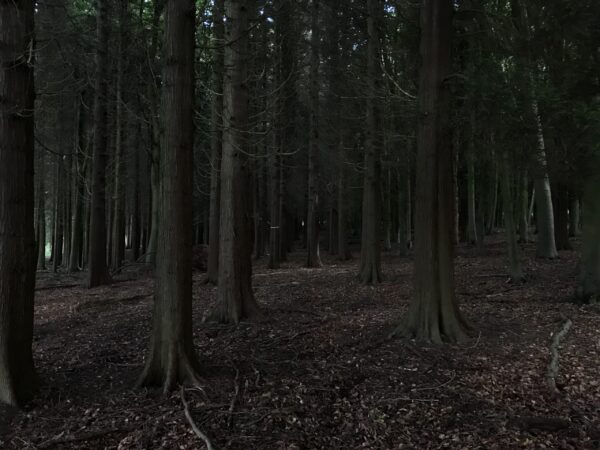
Plantations cast a dense shade and create dark conditions beneath the dense canopy – Wytham Woods, Oxfordshire
1970s onwards
Around this time, the forestry market experienced a big slump – the quality of timber was not always very good, access was often poor (a result of landowners having been paid to plant on any available plot), and oversupply was a problem. Agricultural improvements now focussed on higher yielding, more disease resistant crops and the use of agri-chemicals rather than the expansion of farming area. As such, over-production of food was another new problem.
Conservation began to become a more widespread, familiar and important idea as the scale of the decline in habitats and species began to be understood by a much wider audience. One realisation was that coppiced woodland had supported a vast array of species that were now suffering from the contraction of the coppice industry. As such, the idea of coppicing for conservation reasons began to become more widely studied and understood by academics, perhaps most notably the late Oliver Rackham, and practiced by groups such as the Wildlife Trusts.

Oliver Rackham, pioneer of conservation coppicing, with a volunteer workparty in Hayley Wood Cambridgeshire Photograph copyright Pete Johnstone – www.pjelements.co.uk
Today
As the challenges of climate change become more and more apparent, and the interest in where things come from grows, people have begun to rediscover coppicing as a way of obtaining traditional materials from a local, sustainable source. Coppicing is seeing a renewed interest commercially for this reason and is also expanding into new, high-end markets and products too, spreading the word to a whole new generation and audience.
Challenges to Coppicing
In modern times, coppicing is not without its challenges. These include:
- Increasing deer numbers, particularly from introduced species such as muntjac and fallow. With no natural predators left in Britain, populations can explode and quickly munch all the young, tasty, tender growth in a coppice plot. At best this produces poor quality (short / forked) regrowth but at worse, if the process happens repeatedly, a stool will die.
- There is an ever increasing list of tree pests and diseases in the UK including some, such as ash dieback and Phytophthera, which threaten important coppice species.
- Access to woodland and contract security. Coppicing is a long term commitment but it can be difficult to secure access and cutting rights from landowners to their woods.
With no natural predators left in Britain, deer populations can explode and quickly munch all the young, tasty, tender growth in a coppice plot.

Ash dieback on young coppice regrowth – Hayley Wood, Cambridgeshire

A heavily browsed hazel stool a full growing season after cutting.
Far from the vigorous regrowth you would expect, the nibbled young hazel shoots are clearly visibile. In the background, many other stools in the same condition can be seen, highlighting the scale of the problem.
Hayley Wood, Cambridgeshire
Read more - Deer, Pests & Diseases
Deer
Fallow, muntjac, sika and Chinese water deer have all been introduced to the UK, escaping from deer parks of wealthy landowners. Fallow deer were originally introduced by the Romans but went extinct after the collapse of the Empire, before being re-introduced in the 11th Century. The fashion for deer parks declined in the 15th century and many began to fall into disrepair, allowing escapees to colonise the countryside. Muntjac were brought from China to Woburn Park in Bedfordshire in the early 20th Century and are now widespread across the country.
Different species have different habits which result in different grazing patterns and pressures. Fallow deer, for instance, form herds and roam around the countryside. This can create a large amount of damage to woodlands, but often sometimes only for a relatively short time before they move elsewhere. Muntjac on the other hand are more solitary creatures and so can create a lower level but more constant grazing pressure. Unlike other species, they breed all year round.
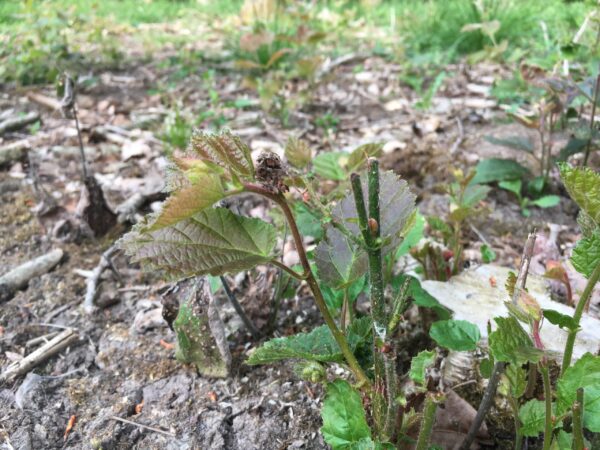
Deer browsing damage to young hazel regrowth – the nibbled off shoots are clearly visible. Hayley Wood, Cambridgeshire
Pests & Diseases
As international movement of plants, animals and people become more commonplace, and climatic conditions gradually change, an ever increasing array of pests and diseases have begun to threaten some of our most important coppice species.
Ash dieback (Hymenoscyphus fraxineus)
This is a fungus which originated in Asia. In its native range it doesn’t cause much damage to its hosts, however its introduction to Europe approximately 30 years ago has devastated the European ash (Fraxinus excelsior). This is because unlike the ash trees in Asia, European ash did not evolve with the fungus and so has no natural defence against it.
The fungus overwinters in leaf litter on the ground, particularly on ash leaf stalks. It produces small white fruiting bodies between July and October which release spores into the surrounding atmosphere. These spores can blow tens of miles away. They land on leaves, stick to them and then penetrate the leaf and beyond. The fungus then grows inside the tree, eventually blocking its water transport systems, causing it to die. The tree can fight back, but year-on-year infections will eventually kill it.
As ash reproduces sexually, i.e. with seed, it is a genetically diverse species and so there is hope that some trees will show a resistance to the disease. This may allow the survival and gradual re-colonisation of the species.
Threats to sweet chestnut
Sweet chestnut is susceptible to sweet chestnut blight Cryphonectria parasitica, a fungus first found in the UK in 2011. It attacks the bark of the tree causing it to crack and eventually develop cankers that can surround (girdle) the stems and kill them off. This will ultimately lead to the death of the tree, though some trees have been known to recover as the fungus can itself be infected by a virus that limits its growth. The fungus originates from Asia but has spread far beyond its native range, causing significant damage in the eastern US. It has slowly been spreading across Europe since accidentally being introduced to Italy in the 1930s. In the UK, infections are currently restricted to isolated sites in southern England and the disease seems to be slow moving.
Oriental chestnut gall wasp Dryocosmus kuriphilus is another recent arrival, first being recorded in the UK in 2015. It is tiny species of wasp with larvae that cause abnormal growths known as galls to form in the canopy of the tree. It is the only known organism to form galls on sweet chestnut. The galls, 1-2cm across, turn from bright green or rose pink to brown, becoming woody as the summer progresses and can cause premature leaf drop. In itself, the wasp is not a significant threat to sweet chestnut, however in high numbers the galls can weaken the tree and make it more susceptible to other pests and diseases, such as sweet chestnut blight. The wasps spread through flight but have so far only been discovered around London and the south east, probably arriving through plant imports before dispersing locally.
Phytophthora plurivora
This is a water-mould common in Europe and was found in a hazel plantation in Bedfordshire in 2016. It prevents buds from fully opening and turns the leaves of the tree brown. Spores are water borne and the infection is normally in the roots. It has been known in the UK for some time but is not normally seen on hazel. It has not been found on the original site, or reported elsewhere, since it was first identified. Phytophthora species are microscopic fungal-like organisms closely related to algae. Their name literally means ’the plant-destroyer’ and they have been responsible for some of the worst plant disease epidemics in history, including potato blight which led to the disastrous Irish potato famine in the 1800s.
Text and photos by Glenn Hadley except where stated otherwise.
Coppicing diagrams inspired by BTCV, redrawn by Glenn Hadley.