Charcoal is one of Europe’s top five drivers of global deforestation. This is according to analysis by the Earthworm Foundation, a not-for-profit organisation focussed on supply chain issues. Despite this shocking discovery, charcoal is still not considered by the British government to be “a forestry risk commodity” in the new Environment Act. It therefore remains unregulated, and imported products may have links to illegal logging operations which contribute to the destruction of some of the world’s most biodiverse tropical forests.
As thousands of Britons plan barbeques over the May bank holiday weekends and beyond, new research shows that a quarter of all UK charcoal imports come from countries of high deforestation risk. Experts are accusing the government of not moving quickly enough to regulate the industry.
In 2020, the UK imported 24,131 tonnes of charcoal from high deforestation risk countries
In 2020, the UK imported more than 98,800 tonnes of charcoal. 24,131 tonnes of it was from high deforestation risk countries, including Indonesia, Nigeria and Paraguay, according to new data from Earthworm Foundation. Industry insiders say this is made possible by a lack of regulation and the opacity of the product’s supply chain.
The Foundation estimates that charcoal is in Europe’s top five products that contribute towards global deforestation, along with beef, palm oil and soy. The organisation believes that between 2011 and 2020, British charcoal imports from high deforestation countries spiked — with 900 percent and 770 percent increases from Paraguay and Indonesia over that period respectively. Overall, the Foundation estimates that charcoal imported into the UK in 2020 used around 181,000 tonnes of wood from high deforestation risk countries. This includes Paraguay where the dry tropical forests of Chaco, home to incredible biodiversity and one of the world’s last isolated forest tribes, are being destroyed at a quicker rate than most other tropical forests on the planet, in order to provide space for agriculture and to meet European charcoal demand.
Some 50 million tonnes of charcoal is produced across the globe annually, from about 400 million tonnes of wood. As well as being used for home barbeques, charcoal — which is made by burning wood in a low oxygen environment — is used commercially by businesses, such as restaurants and music festivals.
Data from the Earthworm Foundation shows that between 2011 and 2020, 94% of all charcoal used in the UK was imported. In 2020,
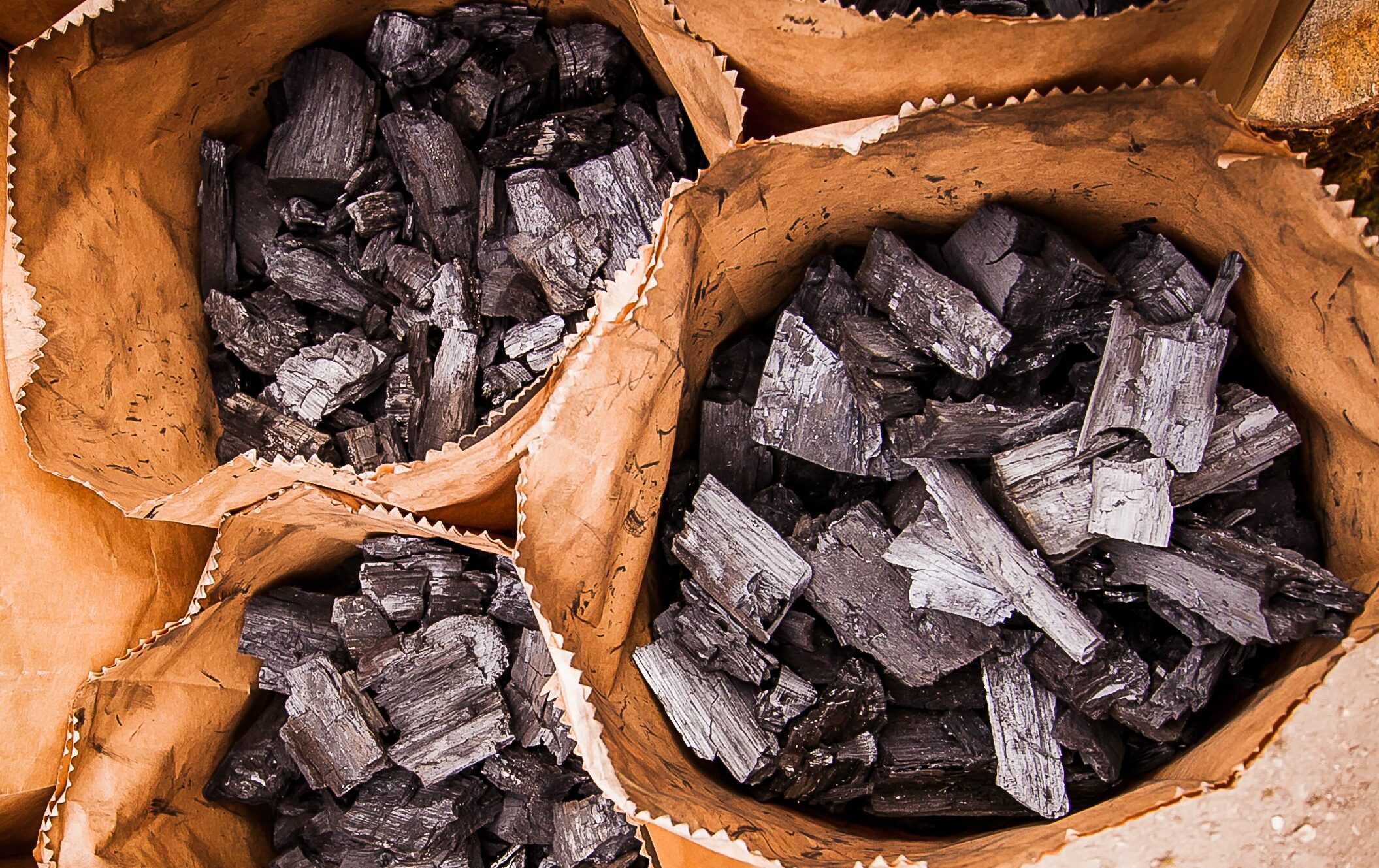
Quality UK produced charcoal is generally sold in Kraft paper bags.
Photo: Jim Bettle
21% of British charcoal imports were from South Africa, 20% from Spain, 18% from Namibia, followed by 14% from Paraguay. Nigeria accounts for 6%, and Indonesia for 4%.
Charcoal is often certified by the Forest Stewardship Council (FSC), the world’s largest certification scheme for wood products. It is meant to show that the wood has been sourced from sustainably-managed forests and that the process has not involved forced labour. However, the FSC has admitted that mistakes have been made in the past and that charcoal from tropical sources has been coming into the British market. It has since tried to improve due diligence standards when suppliers apply for FSC regulation, a spokesperson said, noting that the body also suspended Ukrainian FSC certificate holders in 2019 who had falsely claimed their charcoal was sustainable.
The UK government does not consider charcoal a forestry risk commodity
In 2012, Britain implemented a regulation to ensure imported UK wood products were made from legally-logged timber. Charcoal was however exempted from the law, meaning there is no legal requirement for UK businesses and retailers to source it sustainably or even for it to be FSC-certified.
Absurdly, unlike timber, the government does not consider charcoal “a forestry risk commodity” — a globally traded good and raw material that originates from at risk forest ecosystems such as tropical forest, mangroves and sub-Saharan woodland, whose extraction or production contributes significantly to global tropical deforestation and degradation of the land.
The Department for Agriculture, Environment and Rural Affairs (Defra) has confirmed plans to review the 2012 UK Timber regulations after hosting COP26, the UN climate conference in Glasgow last November. The review has not happened yet, but the ministry has indicated that it is considering adding other products, such as charcoal, to the regulation.
A Defra spokesperson said: “The Government is working hard to tackle illegal deforestation and protect wildlife both at home and
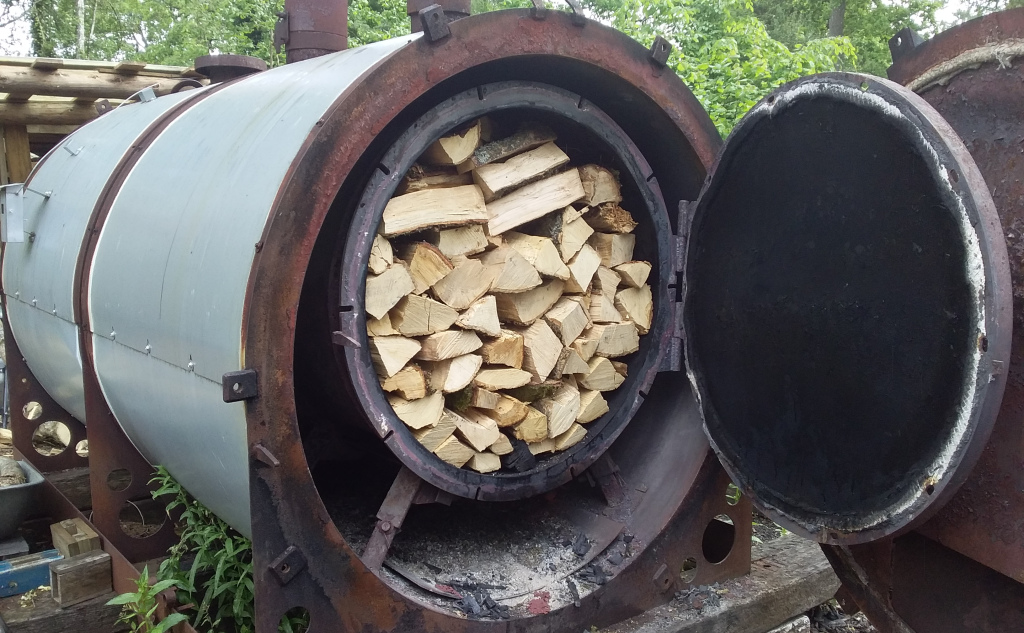
A charcoal retort, ready for firing, loaded with sustainably cut UK wood.
Photo: Suz Williams
abroad. With the Environment Act now law, the UK is committed to going further than ever before to clamp down on illegal deforestation and protect forests, through a package of measures that will ensure greater resilience, traceability and sustainability are built into the UK’s supply chains.”
But Björn Roberts, Earthworm Foundation’s senior forestry adviser, said charcoal’s omission from the regulation “sends the wrong message”.
“Year after year we see new reports of illegal harvest and deforestation in charcoal supply chains feeding UK and EU markets,” he said. It’s now time for charcoal to be regulated in the same way as other forest products, and also to support charcoal producers in ‘problem areas’ who want to do the right thing.”
Jim Bettle, the UK Charcoal Representative at the National Coppice Federation, said that in the meantime, consumers can ensure their charcoal comes from sustainable sources by buying local.

Image: Jim Bettle
“With the focus so much on forest risk commodities, I find it absurd that charcoal is not considered to be one. I was heartened to get to speak to a minister last year who agreed that this was a problem, but as with all these things, there is no timetable for change,” Bettle said. “With no regulation on imported charcoal, it puts UK producers at a huge disadvantage due to the costs that we incur.”
He had this advice for those about to get stocked up for the summer months ahead – “Consumers, look out for British charcoal, it will say on the bag where it’s from. If it doesn’t say then you can pretty much guarantee it’s not sustainable.”